For finding permanent and intermittent faults on live cables
In the power industry, cable identification has to be made using very strict criteria
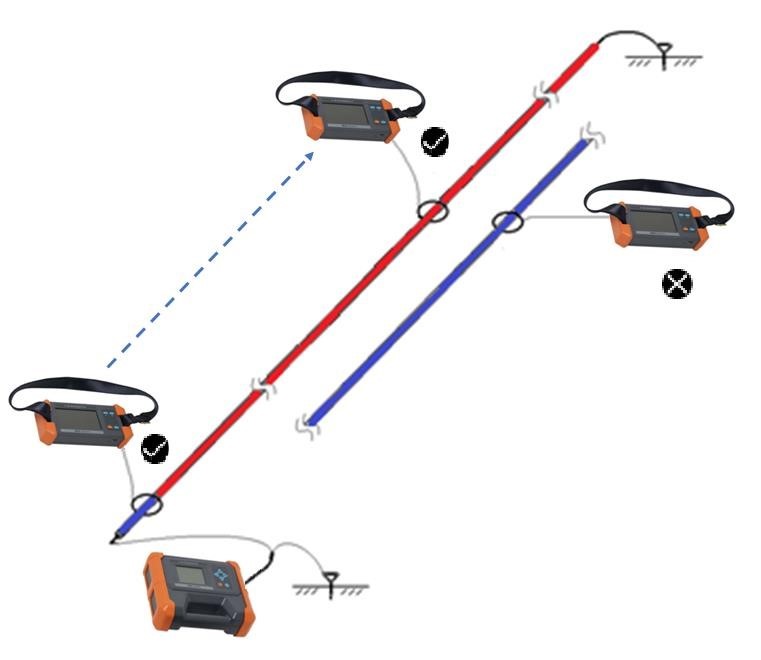
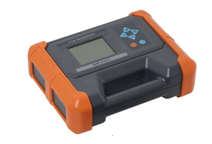
In the power industry, cable identification has to be made using very strict criteria, because it is related to personal safety and mistakes may result in damage to plant. The T-710 is a high-performance cable identification instrument, consisting of a signal transmitter and a receiver. It is used to accurately identify a specific cable among a bundle of cables. The system is suitable for on-line use (3-core armoured cable only) or for off-line cables.
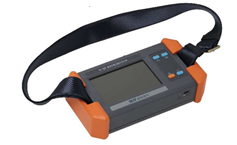
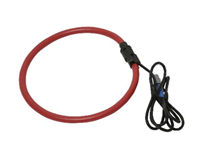
Smart clamp identification using signal transmission is the clearest and most powerful method for cable identification. The frequency of the receiver is set at 1280 Hz or 640Hz, depending on the cable length.
For a dead cable, direct connection is used, with the best connection being core-earth. If this is not convenient a phase to sheath connection may be used, but the sheath should not be connected to earth. For live cables, the clamp coupling method is preferred.
On the target cable, the receiver will identify the frequency and other confirmatory parameters and indicate to show it is correct. A negative indication shows that an adjacent cable has been measured.
The user will set a reference for a particular cable which will identify the phase angle and magnitude of the current in the cable. If the detector is moved to another point of the cable it will compare the new parameters to the set reference. If they match the system will indicate and the cable is identified. Alternatively, indicates the cable has failed to meet the reference criteria and it is concluded that it is not the target cable.